Those who often visit the blog of our marina in Genoa will surely have noticed: we frequently dedicate space to topics related to sustainability on these pages. For example, we have previously discussed the fundamental elements of sustainability on the dock, highlighting how even in one’s own berth it is possible to make a difference in reducing marine pollution; and we have also talked about sustainable navigation, to continue protecting the environment even after leaving the marina. However, when it comes to environmental impact, our minds almost exclusively think of the greatest threat to our planet, namely the harmful emissions caused by the use of fossil fuels; little or even no attention is given to perceived “minor” threats, such as noise pollution and light pollution.
Regarding noise pollution, in fact, we all possess the necessary basics to act virtuously, as none of us likes to be victims of annoying noises when trying to sleep, relax, or perhaps concentrate. We find it a bit more challenging to understand the threats of light pollution, in a world where we humans tend to have absolute control over lighting. Today we want to explain what light pollution on boats is, what damage it causes both in marina moorings and at sea, and how to minimize it.
What is light pollution
The term light pollution refers to the harmful presence of artificial light. Where there is improper, unwanted, excessive, or superfluous artificial light, there is indeed light pollution, which can cause serious environmental damage. Unfortunately, even though, as mentioned above, we tend not to notice it, light pollution today is almost everywhere, resulting from a rapid increase in light sources after sunset in recent decades.
Sailors who move along the coast after sunset know this well, as they see the extraordinary spectacle of illuminated cities: for those mooring in our tourist marina in Genoa, both due to the orography of our city and its vast extent, the view is indeed truly phenomenal. But this enormous amount of light beams, coming from street lamps, house windows, and car headlights, has very negative consequences. It is not only about the theft of the possibility to admire the sky but also about detrimental effects on animal and plant life (not to mention the negative effects that excessive artificial lighting has on humans themselves).
According to a study cited among others by the AdnKronos agency, Italy, along with South Korea, is the G20 nation with the territory most polluted by artificial lighting. The level of light pollution in Italy is such that it eliminates for everyone the possibility of seeing a truly uncontaminated night sky free from artificial light sources.
The damages of light pollution at sea
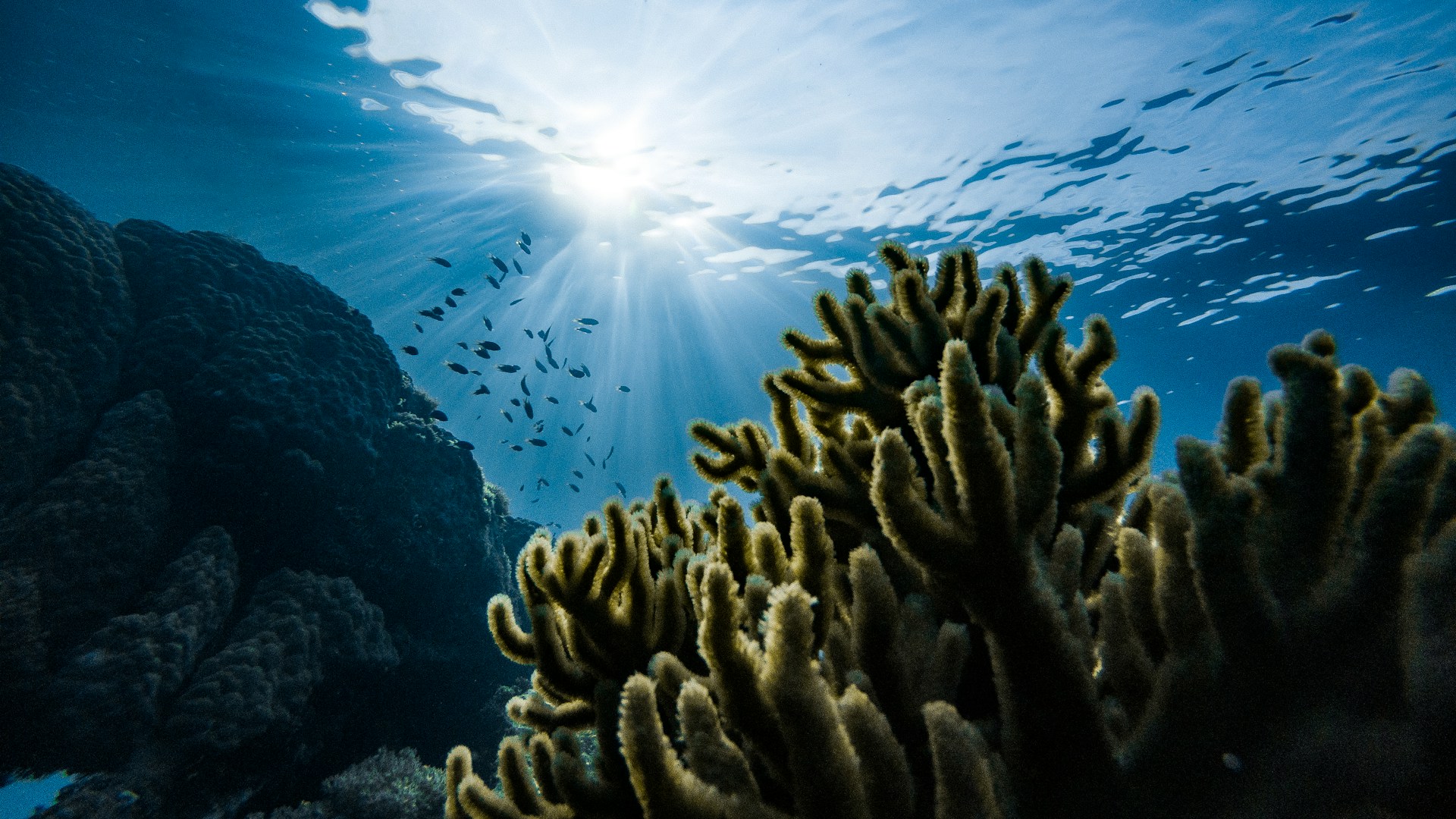
One might think that aquatic ecosystems, those that come to life and develop under the surface of seas, lakes, and rivers, do not have major problems due to light pollution, as this is a typical land-based issue. Well, that’s not the case: one cannot forget that along the coasts – think of the Italian coasts – there are many large and small cities that pour many light beams onto the sea; and this is repeated on rivers and lakes as well.
Then there are indeed the various boats, both recreational and otherwise, that bring artificial light even offshore. But what damage can light pollution do at sea? The premise to understand the enormous amount of negative consequences is simple: there are many biological mechanisms – above and below the water level – that rely on the alternation between day and night, and therefore on the presence and absence of light. Artificial light inevitably alters these rhythms, disrupting very delicate balances.
As explained by biologist Geir Johnsen at the Norwegian University of Science and Technology on the pages of National Geographic, “where to be in the water column, when to mate, when to develop: all this” for fish “is regulated by light.” Unfortunately, “in the last 100 years, humans have also used artificial light, and this has had consequences on animals that we do not realize.”
The effects of artificial light on marine species are diverse. According to a study by the Royal Society Journal Biology Letters, marine worms (namely Pomatoceros triqueter) are attracted to artificial lights, which can have disastrous consequences for the hulls of boats moored in commercial ports as well as in tourist ports; other species, like Plumularia setacea, flee from illuminated seas. Sometimes artificial lights create confusion among marine species, often creating enormous dangers. Consider newly hatched sea turtles just a few meters from the sea: in the presence of visible lights near the beach, they end up not understanding which way the sea is, often leading them to die of starvation or be killed by predators. And these are just some examples of the damage caused by artificial lights at sea or in its immediate vicinity.
Tips for reducing light irradiation, in the marina and during navigation
It has thus been seen that the consequences of light pollution at sea go far beyond what we can imagine. In one’s berth in the tourist marina as well as in open sea, it is therefore advisable to avoid keeping unnecessary lights on, to reduce the impact of our recreational activities on the environment and to cut consumption, with further benefits for the environment. Particularly annoying for underwater creatures are obviously the underwater spotlights, whose use should be minimized.
All this knowing, moreover, that LED lights, although technologically advanced, efficient, and with reduced consumption, also present clear disadvantages for the marine environment: the blue light generated by these devices can penetrate the water column to significant depths. It would therefore be advisable to always opt for warm-toned LED lights, ensuring that the light beams are directed where needed, minimizing the intensity of the light.
The path to sustainability is also made up of small attentions: in our marina in Genoa we know this well, and for this reason, we are constantly working to rethink and improve the daily management of the marina, to always guarantee comfort and safety to sailors, while simultaneously reducing the environmental impact of recreational boating.