Your boat mooring in Liguria. Four wonderful destinations.
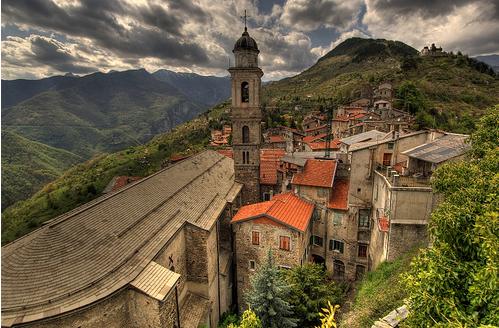
There are numerous reasons that lead sea lovers to moor and populate the boat moorings in Liguria. With a map in hand, intertwining the sea and the hinterland with a red thread, traversing the scents of the land and olives along Western Liguria, we will inevitably cross four good reasons. We are talking about four of the oldest and most picturesque medieval villages: Lingueglietta, Apricale, Seborga, and Triora.
In a hypothetical itinerary, the first of our destinations is Lingueglietta. A hamlet of the Municipality of Cipressa, in the province of Imperia, it is one of the most characteristic villages of Western Liguria, with an intact medieval center.
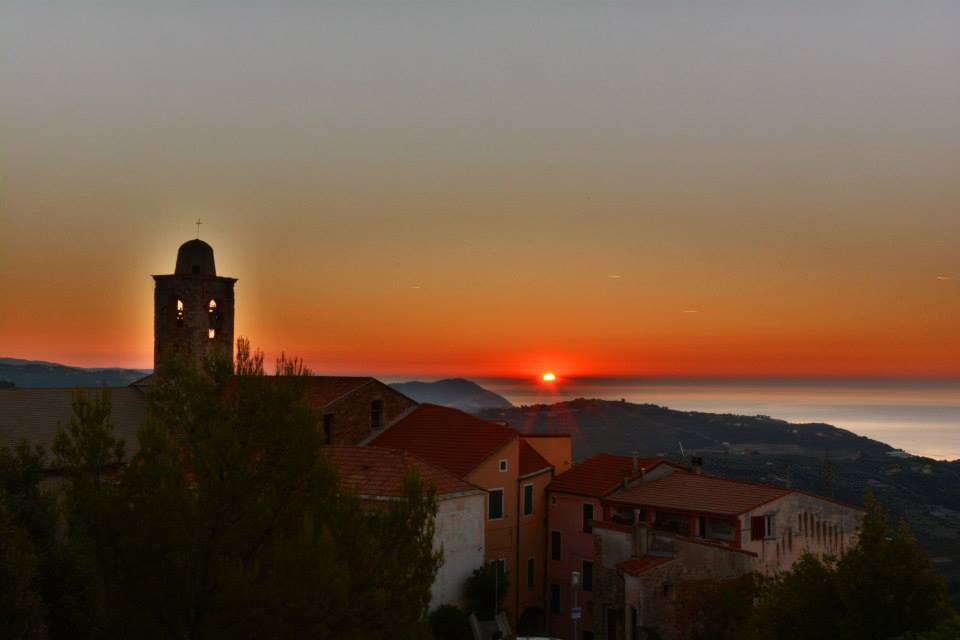
A fascinating place where the narrow streets can only be traversed on foot. The ancient center is perched around the Castle and the medieval church. But the emblem of the village is the fortress-church of San Pietro, which has undergone the transition from a place of worship to a military fortress for defensive reasons.
After this dive into the past, there’s nothing better than satisfying your culinary desires with tastings of local dishes, such as the famous farinata and fritters made here with leftover vegetable soup. For meat lovers, don’t miss the rabbit, raised in stalls along the narrow streets, and wild boar.
You can return to the boat and enjoy the evening on board or stroll along the docks sipping something cool and rest for the next day’s destinations.
With a short navigation westward, which we can conduct staying close to the coastline, we can moor and move inland to the Western Ligurian coast to reach another municipality that is part of the “Most Beautiful Villages in Italy” circuit, Triora.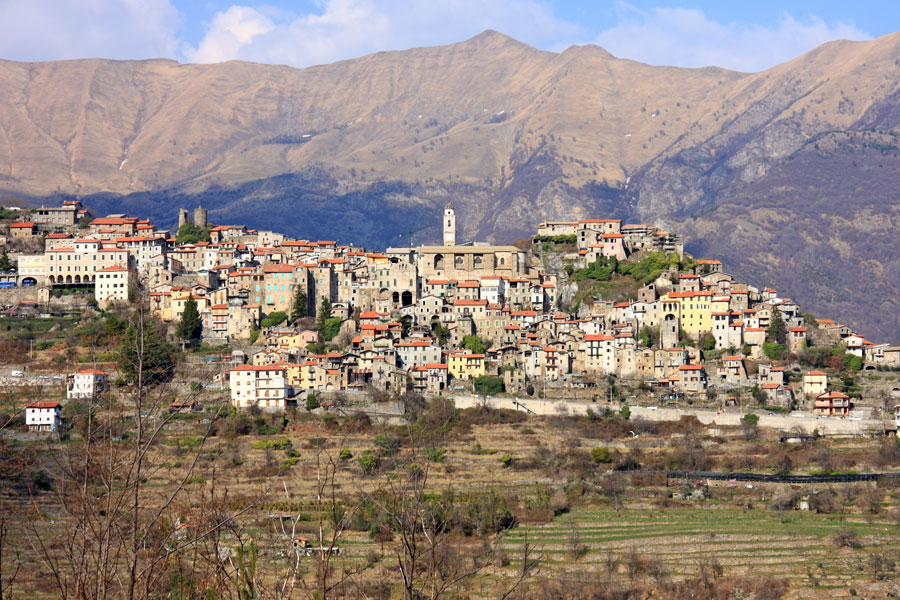
During the summer, visiting the village offers an incredibly cool surprise for those seeking relief from coastal temperatures. The village is located 780 meters above sea level and enjoys a typically mountainous climate.
It’s likely that the village has Roman origins, intertwining with the vicissitudes of the duchies and the clashes between the Maritime Republics (Triora sent troops to support Genoa against Pisa in the famous Battle of Meloria in 1284). However, its fame is perhaps due to more macabre events, from the witch trials that subverted the village between 1587 and 1589. Absolutely not to be missed is the bread of Triora, on which to spread Bruss, a milk derivative similar to a creamy cheese, and the Alpeggio di Triora.
Our next two objectives to close the circle of the tour of the most beautiful villages in Italy are two small towns in the hinterland. The first has become very famous also for its recent history.
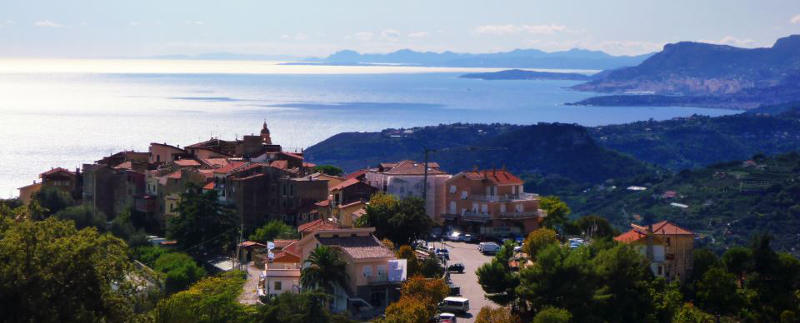
We are talking about Seborga, self-proclaimed principality. Starting from the 1950s, when some members of the village claimed, by virtue of an ancient status as a Principality, independence from the Italian Republic. Therefore, currently in Seborga there is a prince, Marcello Menegatto, known as Marcello I, who mints currency, the Luigino (worth six US dollars) and distributes passports on request. All of this is not recognized by the Italian State, which enforces its legislation. Probably a way to advertise itself that in any case supports the many reasons of interest. Starting from its architecture, with the
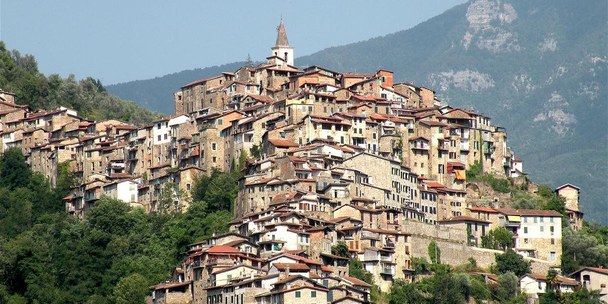
And since we’ve ventured as far as the principality of Seborga, it’s worth making a small effort and going a bit further inland to reach Apricale. One of the oldest Italian villages, whose origin seems to date back to the Bronze Age and famous for having established the
This village, also part of the “Most Beautiful Villages in Italy” route, offers typical products for which it’s worth stopping before returning to the boat. Discovering the fragrance of anchovies with fennel or fish burridda with rice, or even artichokes all’infernu, stuffed artichokes of extraordinary goodness thanks to their particular cooking as well as the simple and tasty filling.
Our itinerary is finished. Discovering how beautiful it is to arrive in Liguria from the sea to explore the beauty of our country.