
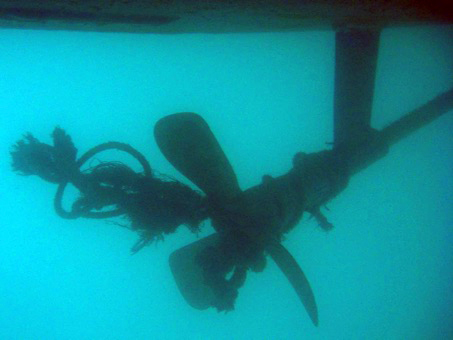
A line tangled around the propeller is really bad luck, but it can happen. Let’s explore together the different ways to resolve this unexpected problem, which occurs in certain specific situations
As winter enters its coldest phase, the staff at the Genoa Marina Porto Antico marina have decided to take stock of another somewhat challenging topic that deserves the attention of boat owners, sailors, and captains—perhaps during an evening of reading by the fireplace.
A rope getting tangled around the propeller is an unpleasant situation that can happen despite our best efforts in various scenarios, from entering the berth to maneuvering in the anchorages. Let’s look at some tips on how to untangle the propeller and what to do in case of an emergency.
Yarn Tangled in the Spinner: Causes
Why can it happen? It happens in crowded ports and it happens on summer days: the line from some buoy, the well-known mooring line, or even a plastic bag adrift, and suddenly the engine stops. It’s the propeller that, encountering a foreign object, blocks the shaft and consequently the engine.
The first operation to perform, as soon as you notice that the engine is no longer running, is to definitively shut down the propulsion system. Marine mechanics explain that if you don’t promptly disengage gear and throttle, the risk is then to increase the stress on the transmission shaft, with the consequence of inevitable damage to it.
 A small tip. If you notice these “symptoms” we just mentioned, a trick is to reverse the gear for a fraction of a second. This sometimes helps by allowing the propeller to be freed in the blink of an eye. The positive result often occurs when the foreign object is a large-sized cable.
Another tip. If it were the onboard lines tangled around the propeller, for example the spinnaker sheet, in some cases these can be untangled by applying simple traction to their free end, always after putting the engine in neutral, not before.
A Rope in the Boat’s Propeller: What to Do
If this is not the case, the next step involves stopping navigation immediately and dropping anchor for the necessary checks.
If it’s not possible to anchor, it’s necessary to proceed as best as possible. We suggest securing the person who will go underwater to inspect the propeller and doing so with a safety line tied to the boat.
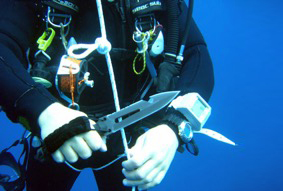
What you need in terms of equipment. You need a good mask, fins, snorkel and a knife. Then dive in the propeller area to see who the “enemy” is. Well armed with a sharp and serrated knife, you can easily defeat the line wrapped around the beautiful propeller fitted to your yacht.
It should be added that during mid-season days, it would be advisable to navigate with a wetsuit on board, as this would help intervene in these emergencies with suitable equipment in case of cold waters. Needless to say how advantaged anyone with diving skills would be, perhaps acquired through an appropriate course, which certainly doesn’t hurt.
