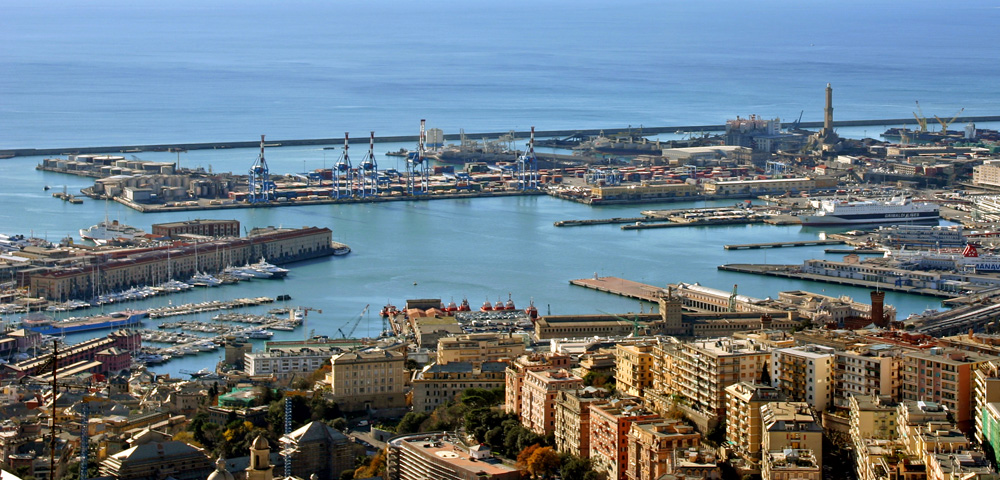
Choosing your own berth is a current concern. Now more than ever, given the extraordinary weather events, the safety of our vessels in port, previously taken somewhat for granted, has become a real priority for boat owners when making choices, perhaps relegating other matters such as convenience, costs, and services to secondary importance. The question that arises is therefore: which berths are safer, which one should I choose? Let us examine the main types of berths to make our choice more effective and secure.
Types of berths and the protections of a marina
How to choose the perfect berth? There is certainly no universal and unequivocal answer to this question. However, by examining the different berths, we can help you make a more informed choice by listing the available alternatives regarding the many types of berths found in ports, the mooring methods, and some advice.
A good port must be built with careful consideration of the morphology and prevalent weather conditions of the location. Historic landing places, established for centuries in natural coves that effectively make them natural ports, offer better security guarantees. The recent storm did not affect the berths in Liguria located within historical structures.
Quayside berths
In ports, the most classic alternatives offered are quayside berths. These can be either fixed or floating.
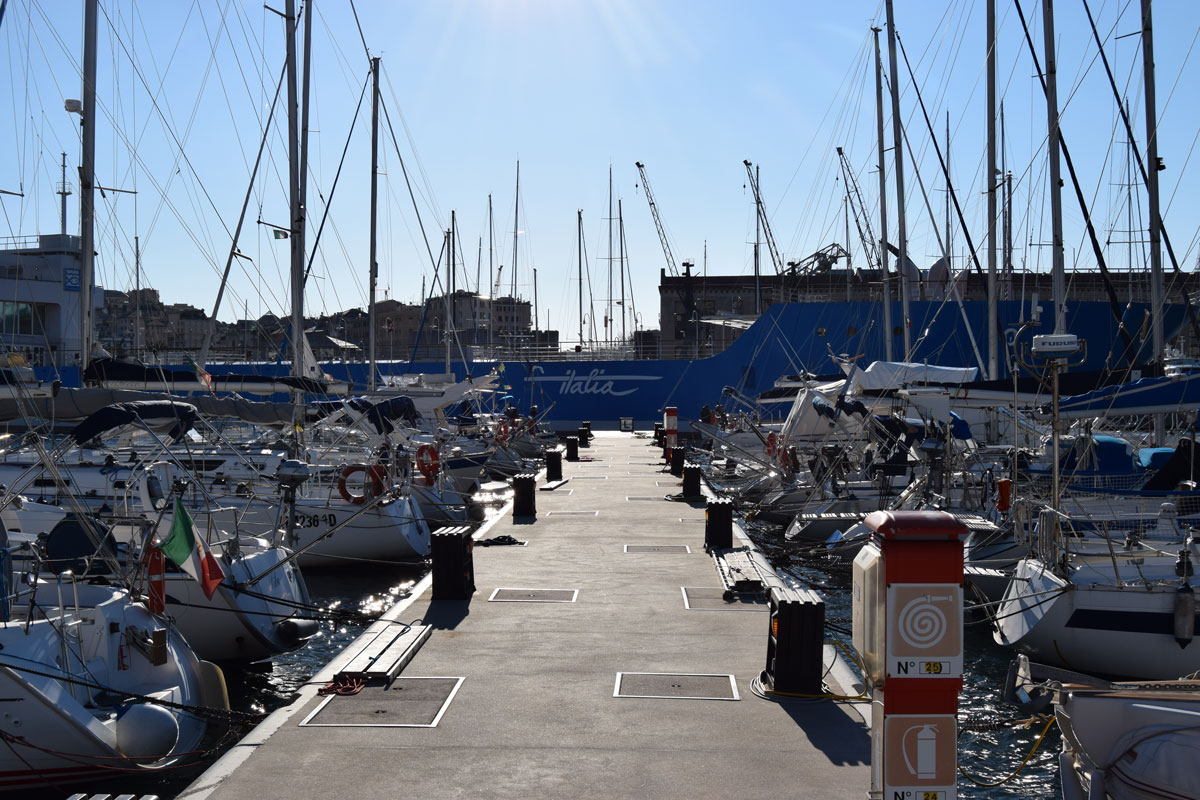 The former are characterized by fixed support pillars, usually made of reinforced concrete, whose base is well embedded in the seabed and extends upwards, supporting the walkway where mooring takes place. These are, for example, the structure of the quays within our marina in Genoa, Marina Porto Antico.
Between its support pillars, spaces are usually left to allow water to circulate without too many obstacles, thus reducing stagnant water phenomena, which would promote hull vegetation growth and bad odors. Equally important, this allows the structure to lighten the continuous pressure from tides.
This alternative, being the most solid, ensures that large vessels can secure their moorings directly to the quay without load-bearing issues. It is therefore no coincidence that our port is an ideal destination for yachts and superyachts in Genoa.
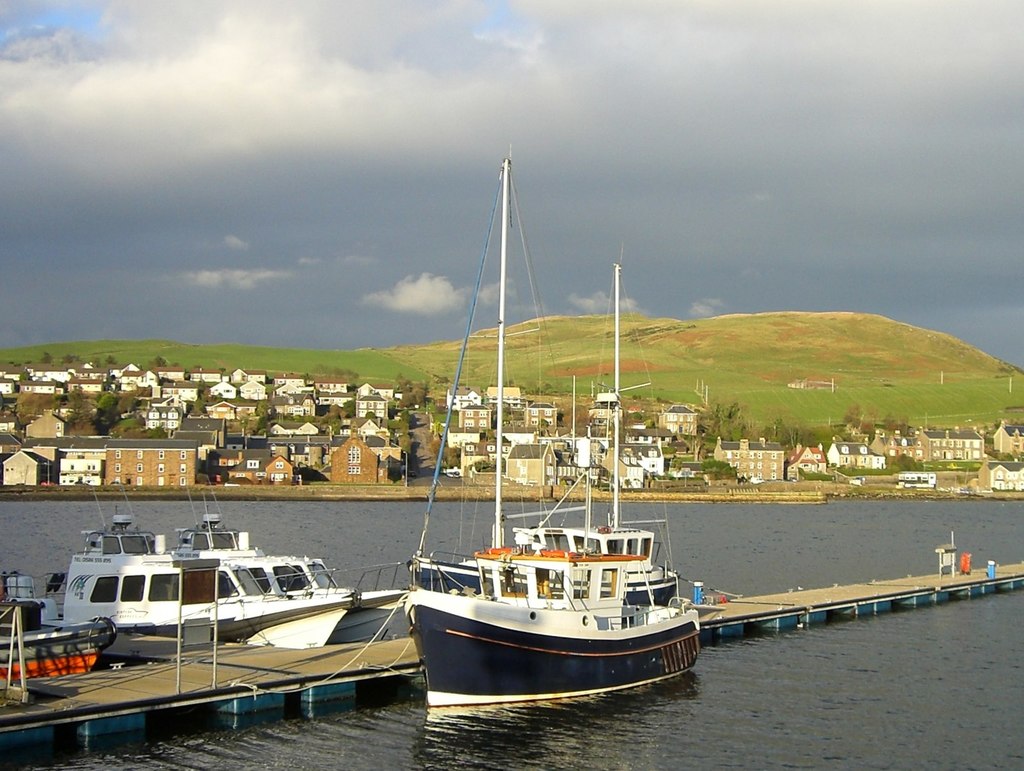
The floating docks, on the other hand, are platforms that float on the water’s surface. They are held in position by chains connected to their anchorages on the seabed, which must be proportioned based on the load of the vessels that will be stationed there. They can be installed practically anywhere, as they don’t require seabed work and sometimes aren’t directly connected to land via a walkway. Generally, small or medium-sized boats moor here; larger vessels often require additional moorings at the stern to avoid overloading the floating structure.
Mooring the boat at the breakwater
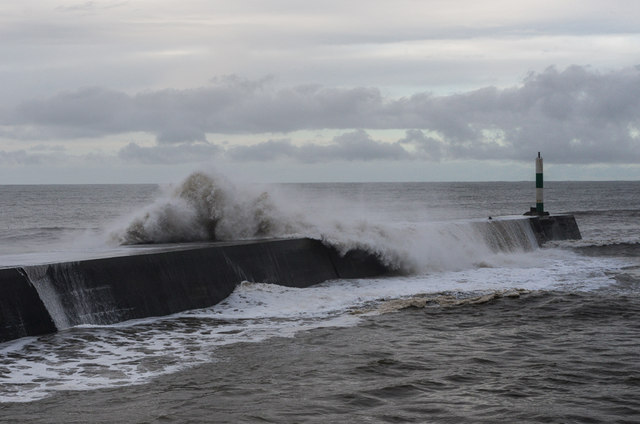 Breakwater berths are those adjacent to the structures that protect the harbor basin. They may seem like attractive spots as they are sheltered behind substantial reinforced concrete structures and are more convenient because they are often accessible by car. However, we must keep in mind that the fury of the sea will find its outlet at this very point; the disaster in Liguria is a clear example of this. Without wishing to depict catastrophic situations, it is easy to imagine that a boat in this position may be reached by sea spray, gusts of wind, and debris. Larger vessels are often moored here, as they can rely on wider maneuvering spaces.
Mooring at a buoy
Less frequent, however, are the types of berths that involve mooring at a buoy or between dolphins.
Buoy moorings are typically used as resources within natural ports that don’t require artificial structures. Boats are moored directly to ground tackle secured to concrete blocks that serve as anchors, allowing bows to freely follow the natural wind direction. Access from land requires a transfer vessel.
Berths between dolphins are characteristic of ports that experience strong tidal ranges, such as in the Venetian lagoon. The dolphins, arranged in rows, to which moorings are secured, are simply wooden poles embedded in the seabed. This solution is necessary to allow the hull to properly follow high and low tide phases without causing excessive tension on the mooring lines. Entering between the dolphins is challenging for those who don’t regularly do it, as it requires practice and leaves little room for error during maneuvering.
Considering maneuvers within the Marina
Ease of maneuvering within the marina is another important element to consider when choosing a berth. If, for example, we had a berth in Liguria, which is statistically subject to Tramontane winds, it would be advisable to choose a spot that exposes the stern to this wind. This will prevent drifting sideways during the entry maneuver, making entry and exit simple.