

Perhaps you’re setting out from the beaches of your region to head to Liguria, to visit Genoa while moored at our marina, Genova Marina Porto Antico. Or perhaps—who knows—your boat is already moored here at our marina. In any case, you’ve started to wonder: what are the required documents for your boat that must be on board before you cast off? We want to make sure you don’t run afoul of the Nautical Code and face the resulting penalties—so it’s best to take a look at this checklist, which is divided into required documents for small craft and required documents for larger vessels!
Mandatory documents on board: the list for small craft
- Identity document: let’s start with something easy, but not too trivial. All persons on board your boat must present their identity documents, which must be shown in case of inspection by the competent authorities.
- Boat License: As is well known, a boat license is required whenever sailing more than 12 miles from the coast, or when operating boats with engines rated at more than 40.8 cavalli, or with engines having a displacement greater than 750 cc (in the case of two-stroke fuel-injected engines) or greater than 1,000 cc (in the case of direct-injection or four-stroke carbureted outboard engines).
- Document certifying engine power: as required by former article 28 of the Navigation Code.
- Unit type approval certificate and declaration of conformity: these are necessary to potentially demonstrate authorization for navigation beyond 6 miles from the coast.
- Insurance: small craft are not required to have insurance, a policy that however must be present for all propulsion systems above 3 horsepower. It is therefore understood that small craft liability insurance also becomes practically mandatory.
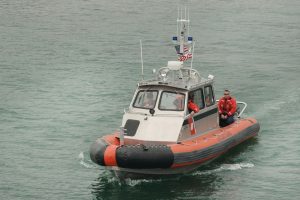
Required Documents and Licenses: The List for Boats
- Navigation license: all vessels, unlike small craft, must be registered in the Pleasure Craft Register.
- Engine power declaration: this document, starting from 2005, replaced the previous engine use certificate.
- Boat liability insurance: insurance becomes mandatory – for the boat, no longer for the engine – when dealing with vessels, always and in any case with coverage equal to or exceeding 2.5 million euros for personal injury, and equal to half a million euros for property damage.
- Safety certificate: this is the certificate issued at the time of registration and must be renewed every 8 or 10 years (depending on the boat category).
- RTF license and RTF Certificate: the presence of a VHF radio on vessels can be taken for granted (which is not taken for granted, but recommended, in the case of small craft). For their use, both documents are necessary, together with a copy of the VHF radio liability assumption declaration.
These are the mandatory documents on board, to always have on board when leaving a mooring. It should be noted that in the case of navigation in international waters other documents might be necessary; however, obligations change from state to state, and it is therefore worthwhile to inquire at the consulate before departure to be certain of complying with all applicable regulations. Those intending to navigate outside the European Union should also contact the Maritime Border Police Office and request completion of the document for navigation in international waters, which will include boat data, passenger information, and itinerary.
Do you have all the necessary documents? Then all that remains is to depart: we await you at the Marina Porto Antico tourist port in Genoa, to visit our city and discover the beauties of the Ligurian coast!
FAQ on Documents to Bring When Sailing
What is the difference between a “natante” and a “imbarcazione” in terms of insurance requirements?
For watercraft, the insurance requirement applies directly to the engine. For boats registered in the Recreational Vessel Registry, however, the liability insurance policy is tied to the boat itself and must provide the minimum coverage required by law of 2.5 million euros for bodily injury and 500,000 euros for property damage.
What permits are required when setting sail from Genoa to navigate in international or non-EU waters?
For international routes outside the European Union, in addition to standard ship’s documents and the crew’s passports, you must contact the Maritime Border Police Office. You must have the appropriate departure documentation completed, which records the vessel’s specifications, the list of people on board, and the planned itinerary.
What are the consequences for someone who enters a marina without the proper documentation?
In the event of inspections by the Harbor Master’s Office or maritime authorities along the coast or upon entering a marina, failure to present the required documents (such as the navigation license, liability insurance policy, or boat license where required) will result in administrative fines—which can be substantial—and, in the most serious cases, the impoundment of the vessel.